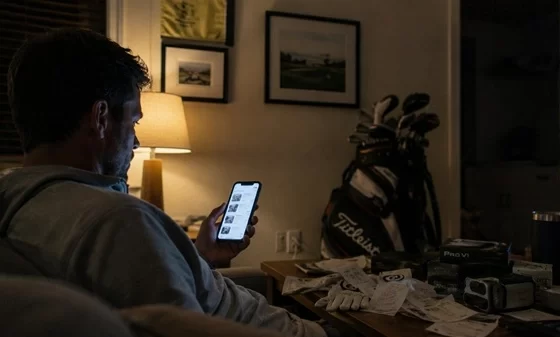
I still get that small spike of excitement when a new gadget arrives. Box on the desk. Tape to peel. That brief moment where it feels like something is about to get better.
Then it starts.
Setup screens. Account logins. Updates that show up before you’ve even used the thing once. And by the time it’s “ready,” the feeling you actually bought it for is already half gone.
I’ve noticed this pattern enough times now that it doesn’t feel like bad luck anymore. It feels like a structure.
The hidden exhaustion of owning modern gadgets isn’t a design flaw—it is a system of modern tech maintenance and planned dependency. When you buy a new device today, the purchase is no longer the finish line; it is an onboarding ticket into an ongoing cycle of updates, setup loops, and constant digital upkeep.
I set up 3 new devices in the same week. None of them felt finished.
This wasn’t some abstract realization. It came from a week where I upgraded my Pixel phone, bought new earbuds for commuting, and tested a Galaxy smartwatch at the same time.
The pattern became obvious fast.
The Pixel setup started with an Android onboarding screen that immediately pushed a system update before I could even reach the home screen properly. Then came the Google account recovery flow, permission prompts, app restore requests, and backup syncing. At one point, I was waiting for Google Photos to re-index thousands of images before the phone even felt usable.
The earbuds were worse in a different way.
They paired through Bluetooth instantly, but most of the actual features were locked behind the manufacturer’s companion app. Noise cancellation controls, firmware updates, touch gesture customization — none of it worked until the app finished downloading another update in the background.
Then came the Galaxy Watch.
I expected a basic setup. Instead, I ended up installing:
- Galaxy Wearable
- Samsung Health
- A separate watch plugin package
Sleep tracking and notifications didn’t fully sync until all three apps were updated and granted permissions individually.
That’s the moment the article idea clicked for me.
None of these devices was broken. None were objectively bad products. But every single one felt incomplete until I spent time maintaining, syncing, updating, and configuring them.
The purchase wasn’t the finish line anymore.
It was the start of system management.
Setup is no longer setup. It’s onboarding into a system.
I used to think setup meant “get it running.” Now it feels more like joining an ecosystem that’s already halfway running without me.
When I set up a new phone recently, the flow looked like this:
- Sign in to a primary account
- Recover a backup I didn’t fully want
- Accept permissions I’d revisit later (but never do)
- Install updates that block access until complete
By the time I reached the home screen, I wasn’t excited. I was just done waiting.
Friction points I keep hitting:
- Mandatory updates before first use
- Forced account creation for basic features
- Backup restores that overwrite what I wanted to test fresh
It doesn’t feel like ownership anymore. It feels like entry paperwork.

The maintenance stack starts immediately (and never stops)
Here’s the part that becomes exhausting over time.
Modern gadgets don’t stay stable. They stay active. Even when nothing is technically broken, there’s always some layer demanding attention in the background.
The Tech Maintenance Matrix
1. Software Layer
OS updates that interrupt active workflows and abrupt app layout changes that shift layouts without any prior warning.
2. Account Layer
Random security logouts, unexpected password re-verification loops, and lingering cloud sync conflicts between your ecosystem devices.
3. Ecosystem Layer
Hardware dependencies on remote cloud platforms, companion apps required for core usage, and features gated behind subscription models.
4. Attention Layer
Relentless background notification noise, update notifications at inconvenient moments, and system settings needing constant micro-tweaks.
None of these problems feels catastrophic individually. That’s what makes them effective.
The friction builds slowly in the background until using tech starts feeling less like ownership and more like ongoing system maintenance.
Why new tech often feels worse than older devices

This part sounds counterintuitive, but I’ve felt it repeatedly.
New devices are faster. More capable. Better specs across the board. But the experience often feels less satisfying.
1. The software feels unfinished at launch
I’ve had devices ship with features that clearly weren’t fully ready. They arrive later through updates, which creates a strange feeling:
You’re using something new that still isn’t complete.
That removes the “arrival moment” you used to get with tech.
2. Everything depends on everything else
Nothing works alone anymore.
A phone isn’t just a phone:
- It needs cloud sync
- It depends on account ecosystems
- It connects to apps that control core features
Even earbuds now depend on apps for full functionality.
So instead of owning a device, I’m managing a small network of dependencies.
This shift isn’t random. Over the past decade, consumer tech companies have slowly moved away from one-time hardware profits and leaned harder into recurring software revenue, cloud services, subscriptions, and ecosystem lock-in.
You can feel that change directly in modern gadgets.
A phone isn’t just hardware anymore. It’s an entry point into cloud backups, premium storage plans, companion apps, cross-device syncing, subscription features, and account ecosystems designed to keep you inside a specific platform for years.
That’s part of why new gadgets now feel less like standalone tools and more like ongoing service environments. The hardware is only the front door.
3. The flow gets interrupted constantly
I rarely get uninterrupted use anymore.
Typical interruptions include:
- Permission prompts mid-use
- Background updates kicking in
- Settings are resetting after software changes
Even when a device is technically working, it rarely feels “quiet.”

The real cost isn’t money. It’s attention.
Price tags are obvious. Attention cost isn’t.
I only really noticed this when I started counting how many small decisions a single device forces in a week.
- Should I enable this feature?
- Why did this permission reset?
- Do I need this update now, or can I delay it?
- Why is storage full again?
It’s not exhausting dramatically. It’s more like background noise that never shuts off.
And when you stack multiple devices, that noise multiplies.
At some point, ownership starts to feel like upkeep.
Planned obsolescence matters less than planned dependency
People often focus on gadgets wearing out. Batteries degrade. Devices slow down. That part is visible and predictable.
What’s less visible is how usefulness gets shaped over time.
I’ve seen this happen in a few ways:
- Apps stop supporting older system versions
- Features move behind subscription models
- Devices require newer accounts or services to stay fully functional
The device doesn’t stop working. It just stops being fully usable without additional layers.
That’s not a breakdown. That’s controlled dependency.
The shift from ownership to upkeep
This is the core change I keep noticing with modern tech.
Before:
- Buy something
- Use it
- Forget about it
Now:
- Buy it
- Set it up
- Update it
- Maintain it
- Troubleshoot it occasionally
- Repeat
There’s no stable endpoint where things feel finished anymore.
Even when everything works, it still feels temporary. Like something in the background is waiting for attention.
And that’s really why buying new tech can feel strangely empty now.
The excitement gets consumed by setup screens, software updates, account syncing, and ongoing maintenance before you ever settle into actually enjoying the device.
So instead of getting a clear “ownership moment,” you end up entering a system that keeps demanding interaction long after the purchase is done.
It’s not that the technology is worse.
It’s that the experience never fully stops.
Conclusion
Modern tech hasn’t stopped improving. If anything, it’s more capable than ever. But that capability comes with constant background movement. Nothing stays still long enough to feel fully finished.
So buying something new doesn’t feel like a moment anymore. It feels like entry into a system that continues long after the purchase.
And that changes how satisfaction works. Not loudly. Just steadily.
Over time, the excitement gets replaced by management. And management doesn’t feel like ownership.
Final Note:
If new gadgets feel underwhelming lately, it probably isn’t just about specs, pricing, or design fatigue. The bigger shift is that modern devices no longer arrive as finished products. They arrive as ongoing systems that need updates, syncing, account management, and constant maintenance long after the purchase is done.
You don’t really “finish” setting up tech anymore. You just reach the point where the upkeep begins.